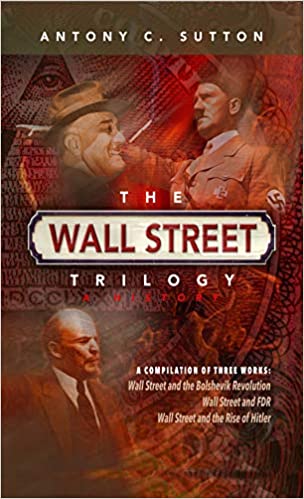
Wall Street and the Bolshevik Revolution
📰 Introduction
In "Wall Street and the Bolshevik Revolution," Antony C. Sutton delves into the surprising and often concealed financial connections between American financiers and the Bolshevik Revolution. Sutton challenges the conventional historical perspective that capitalists and communists are inherently adversarial by uncovering the significant support the Bolsheviks received from Wall Street bankers.
💼 Chapter I: The Actors on the Revolutionary Stage
🌟 Key Figures
- Karl Marx: Symbolizes future revolutionaries Lenin and Trotsky.
- J.P. Morgan, John D. Rockefeller: Prominent Wall Street financiers depicted in a cartoon by Robert Minor, illustrating the alliance between financial capitalists and socialists.
🎭 Revolutionary Alliance
- The notion of an alliance between Wall Street financiers and Marxist socialists contradicts the accepted political dichotomy.
- Both extreme right (fascist) and extreme left (communist) advocate for totalitarian control, making them natural partners for monopoly capitalists seeking control over society.
🛫 Chapter II: Trotsky Leaves New York to Complete the Revolution
🗽 Trotsky’s Journey
- Trotsky, expelled from France in 1916, arrived in New York in January 1917.
- Despite meager earnings, Trotsky lived a comfortable life, raising suspicions about additional unreported sources of income.
- U.S. Senate Overman Committee and British intelligence identified German funds as the source of Trotsky's financial support.
🌐 Political Movements
- Trotsky proposed anti-war resolutions in New York, aligning with socialist goals to disrupt capitalist nations.
🇨🇦 Canadian Documents
- Trotsky and other revolutionaries were detained by Canadian authorities but released after interventions, highlighting international intrigue and support.
📜 Chapter III: Lenin and German Assistance for the Bolshevik Revolution
🚆 Journey to Russia
- Lenin and 32 revolutionaries traveled from Switzerland to Petrograd with German support.
- German Foreign Ministry facilitated this, aiming to destabilize Russia during WWI.
- Lenin’s Bolsheviks received significant funding from Germany, critical for their revolutionary activities.
📜 The Sisson Documents
- Alleged documents bought by Edgar Sisson purportedly showed Bolshevik leaders as German agents, though their authenticity remains debated.
🌍 Chapter IV: Wall Street and World Revolution
🏦 Financial Powerhouses
- Rockefeller and Morgan empires dominated American finance and industry, with extensive global influence.
- Wall Street’s involvement in revolutions was not new, with documented cases in Panama, China, and Mexico.
🥇 Tsarist Loans
- Wall Street banks, notably National City Bank and Guaranty Trust, facilitated significant loans to Tsarist Russia, even against international law.
- Communications between these banks and the State Department reveal the strategic importance of these financial operations.
💰 Olof Aschberg’s Role
- Known as the "Bolshevik Banker," Aschberg’s Nya Banken in Stockholm was pivotal in channeling funds from Germany to the Bolsheviks.
- Aschberg’s financial maneuvers during and after the revolution highlight the international dimension of Bolshevik financing.
🚑 Chapter V: The American Red Cross Mission in Russia — 1917
🕵️♂️ Red Cross as a Mask
- The mission, ostensibly for humanitarian purposes, served as a cover for supporting the Bolshevik Revolution.
- Wall Street financiers, particularly from Guaranty Trust and National City Bank, played crucial roles in the mission.
- William Boyce Thompson, a key figure, directly funded the mission, reflecting Wall Street’s deep involvement in revolutionary activities.
🧩 Conclusion
Antony Sutton's "Wall Street and the Bolshevik Revolution" presents a compelling argument that challenges traditional historical narratives. The book meticulously documents the financial support provided by Wall Street bankers to the Bolshevik revolutionaries, revealing a complex web of interests that transcends ideological boundaries. By highlighting the mutual benefits of the alliance between monopoly capitalists and revolutionary socialists, Sutton calls for a reevaluation of the perceived dichotomy between capitalism and communism in early 20th-century history.
🗝️ Key Points Expanded
🟢 Historical Revision
The book encourages a reexamination of the historical relationship between capitalism and communism, suggesting that they were not always adversaries but sometimes partners for mutual benefit.
🟢 Financial Connections
Sutton provides evidence of substantial financial backing from major American banks to the Bolsheviks, challenging the narrative that these groups were natural enemies.
🟢 Trotsky's Support
Details the mysterious financial support Trotsky received, including an American passport, which facilitated his crucial role in the Russian Revolution.
🟢 German Involvement
Explores the strategic German support for Lenin and the Bolsheviks, aimed at destabilizing Russia during WWI.
🟢 Red Cross Mission
Reveals the Red Cross mission's dual purpose, serving both humanitarian needs and Wall Street's interests in supporting the revolution.
🟢 Olof Aschberg
Highlights Aschberg’s central role in financing the Bolsheviks through Nya Banken, demonstrating the international financial network supporting the revolution.
🟢 Post-Revolution Exploitation
Discusses how American businesses sought to exploit the new Bolshevik regime for commercial gain, reflecting pragmatic rather than ideological motivations.
🟢 Lenin’s Return
Details Lenin’s facilitated return to Russia, which was critical for the success of the October Revolution, supported by German and possibly American interests.
🟢 Contradictory Alliances
Examines the paradoxical nature of capitalist support for communist revolutions, driven by the desire for monopoly control and exploitation of new markets.
🟢 Impact on History
Argues that the collaboration between Wall Street and the Bolsheviks had profound implications for both Russian and American history, influencing international relations and economic policies.
🎯 Summary Expanded
- Background and Thesis: Sutton's thesis challenges the entrenched dichotomy of capitalists versus communists by highlighting the financial ties between Wall Street bankers and the Bolsheviks, suggesting a more complex relationship driven by mutual benefits.
- Trotsky's Escape and Support: Trotsky's return to Russia, crucial for the Bolshevik success, was facilitated by financial and logistical support from American and German sources, including a suspiciously well-funded lifestyle and direct intervention by President Wilson.
- Lenin and German Assistance: Lenin's journey to Russia, funded and facilitated by Germany, was instrumental in the Bolshevik seizure of power. German funding was crucial in broadening the Bolshevik base and supporting their revolutionary activities.
- Wall Street’s Interests and Red Cross Mission: The American Red Cross mission in Russia, ostensibly humanitarian, was a front for supporting the Bolsheviks, with significant funding and logistical support from Wall Street financiers like William Boyce Thompson.
- Olof Aschberg’s Role in Financing: Aschberg’s Nya Banken was a critical conduit for funds from Germany to the Bolsheviks. His activities before, during, and after the revolution highlight the international dimension of Bolshevik financing.
- Post-Revolution Exploitation and Contradictions: After the Bolsheviks took power, American businesses sought commercial opportunities, reflecting a pragmatic approach to revolutionary change rather than ideological alignment.
- Contradictory Alliances: The book emphasizes the paradox of capitalist support for a communist revolution, driven by the desire for monopoly control and the exploitation of new markets, challenging the simplistic view of capitalists as natural enemies of socialists.
- Historiographical Challenge: Sutton's work calls for a reexamination of historical narratives, urging historians to consider the complex and often concealed alliances between capitalists and revolutionaries.
- Impact on History: The collaboration between Wall Street and the Bolsheviks had significant implications for both Russian and American history, influencing international relations, economic policies, and the trajectory of 20th-century geopolitics.
- Broader Implications: The book highlights the broader implications of these alliances, suggesting that the financial and political dynamics of the early 20th century were far more interconnected and complex than traditionally understood.